Induction Hardening has really started to shake things up in the manufacturing world. I recently came across a report from MarketsandMarkets that says the market for induction heating equipment is expected to hit around $2.15 billion by 2026. That’s pretty impressive, and it’s mostly because people are looking for ways to boost the performance of metals. One of the big reasons behind this growth? The adoption of cutting-edgeinduction hardening equipment. These machines don’t just heat metals—they help improve their mechanical properties and even make metal parts last much longer.
Companies like Inductoheat and Ajax-Tocco are really leading the charge here. They offer top-notch induction hardening solutions that tick all the right boxes for various industry standards. The tech is pretty cool, letting you heat things with precision and use energy more efficiently. That said, as more folks jump into this market, it can get pretty tricky to pick the right equipment. Things like whether the machine is compatible with your setup and what it’ll cost to operate are definitely worth thinking about.
Of course, not every induction Hardening Machine out there is created equal. Some are more reliable than others. It’s really smart to go for equipment that comes with good technical support and solid warranties. Honestly, working with experienced suppliers can save you a lot of headaches in the long run. Bottom line? Making informed choices is key if you want to make the most of this evolving tech—and get the best bang for your buck.
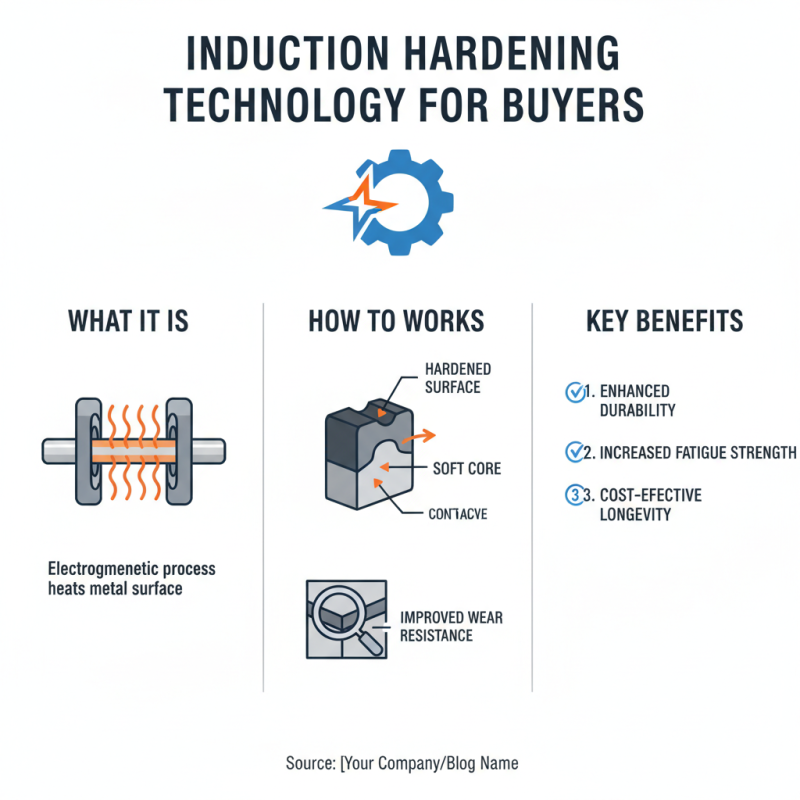
Induction hardening is a highly efficient process that improves the durability of metal parts. By using electromagnetic induction, this technique allows for local heating of the material. It heats the surface rapidly while leaving the core relatively unchanged. This creates a hardened outer layer, enhancing wear resistance and fatigue strength.
For buyers, understanding this technology is crucial. The key lies in temperature control and heating time. If too hot or too long, the material can become brittle. Conversely, insufficient heating will not yield the desired hardness. Each component must be assessed based on its specific requirements and intended application.
Induction hardening equipment often varies in design and specifications. It is essential to evaluate options carefully. A mismatch can lead to inefficiencies or suboptimal results. Key factors to consider include coil design, power frequency, and cooling systems. Familiarity with these aspects will aid buyers in making informed decisions. It's a balance of quality and cost-effectiveness, and mistakes can be costly down the line.
When considering induction hardening equipment, several key features can significantly enhance performance and efficiency. One essential aspect is the power supply. A reliable and adjustable power source allows for better control over the hardening process. This flexibility ensures that various materials and thicknesses are adequately processed. Adequate cooling systems are also crucial. They prevent overheating and maintain the integrity of the components during the hardening cycle.
Tips for selecting your Induction Equipment : Check the availability of user-friendly interfaces. A simple interface can streamline operations, making it easier for technicians to manage settings. Additionally, consider the manufacturer's support and warranty options. Good after-sales service can be a significant advantage.
Another feature to assess is the frequency range of the induction coils. Wider frequency ranges allow for more versatile applications. This helps in handling diverse jobs without needing multiple machines. Examine the machine’s footprint too. Space-efficient designscan be critical in crowded manufacturing environments. Potential buyers should also reflect on their current and future production needs, as investing in the right Induction Equipment can save time and costs in the long run.
In 2026, the landscape of induction hardening equipment will showcase significant advancements. The demand for industrial induction heating equipment continues to rise, driven by industries that prioritize efficiency and precision. A recent market analysis projects that the global induction hardening equipment market will grow by 6.7% CAGR through 2026. This growth reflects the ongoing innovation and investment in enhancing the performance of these essential tools.
Top brands are increasingly focusing on energy efficiency and enhanced processing capabilities. For instance, induction hardening can reduce cycle times by up to 30% compared to traditional methods. However, some manufacturers still struggle with integrating these modern advancements into their existing frameworks. This gap highlights the need for ongoing education and adaptation within the industry.
Moreover, industry experts emphasize the significance of choosing reliable suppliers. Products that don’t meet specified quality standards can lead to increased operational costs. As companies strive for optimal performance, experts suggest that a thoughtful evaluation of equipment's specifications is crucial. The induction hardening equipment market is evolving, and buyers will benefit from staying informed about technological trends and market shifts.
Induction hardening equipment is vital for industries demanding advanced metal processing. It enhances durability, strength, and wear resistance of components. Recent reports indicate a growing demand for these machines in automotive and aerospace applications. As companies prioritize efficiency, understanding equipment specifications is crucial.
Key specifications to examine include frequency range, power output, and coil design. Higher frequencies often allow for faster heating, yielding better operational efficiency. Power output affects the speed of the process, with some models supporting output levels exceeding 100 kW. Coil design plays a significant role in uniform heat distribution, improving overall results. Look for systems equipped with advanced cooling solutions to maintain performance.
Tip: Always assess your specific needs before investing. Each operation may require a different power output or frequency. Researching the latest advancements in Induction heating equipment ensures you choose a reliable solution. Be cautious; not every high-power model guarantees better performance. Balancing specifications with practical application is essential.
| Model | Power (kW) | Frequency (kHz) | Max Workpiece Size (mm) | Cooling System | Weight (kg) | Price Range (USD) |
|---|---|---|---|---|---|---|
| Model A | 30 | 20 | 150 | Water-cooled | 200 | $50,000 - $60,000 |
| Model B | 40 | 25 | 200 | Air-cooled | 250 | $70,000 - $80,000 |
| Model C | 25 | 15 | 100 | Water-cooled | 150 | $30,000 - $40,000 |
| Model D | 50 | 30 | 250 | Air-cooled | 300 | $90,000 - $100,000 |
| Model E | 35 | 18 | 175 | Water-cooled | 220 | $55,000 - $65,000 |
When considering induction hardening equipment, cost is a significant factor for global buyers. Budgeting for Induction quenching equipment involves various aspects. Initial costs can be steep, requiring careful financial planning. Yet, buyers often overlook operational expenses. Maintenance, energy consumption, and training need consideration, too. These add up over time, impacting overall budgets.
Additionally, investing in high-quality induction quenching equipment promises better efficiency. While cheaper options may save money upfront, they often lead to higher downtime or failure rates. This creates a cycle of unexpected costs. Assessing the total cost of ownership is crucial. Reliable equipment can reduce long-term expenses, making it a smarter choice.
However, not all buyers understand the full implications of their choices. Many focus solely on the purchase price. This narrow view can lead to regrets later on. It’s essential to look beyond initial costs and think about productivity. Investing wisely today can yield significant returns tomorrow.
Induction hardening is gaining traction across various industries worldwide. As manufacturers face ever-increasing demands for durability and efficiency, this process stands out. It uses electromagnetic induction to heat metal parts, followed by rapid cooling. The result? Enhanced hardness, toughness, and wear resistance in components.
The shift towards automation is evident in induction hardening equipment. Modern systems now incorporate advanced controls and monitoring capabilities. This evolution enhances precision and energy efficiency. Yet, the initial investment in these technologies can deter smaller enterprises. Sometimes, companies struggle to find the right balance between cost and innovation.
Moreover, sustainability is becoming a critical concern. Industries are now asking how to make induction hardening environmentally friendly. Reducing energy consumption and waste is essential. Some enterprises may not have a clear strategy for achieving this. Addressing these challenges requires a collaborative approach within the manufacturing sector. Open discussions on best practices can lead to significant advancements.
Induction hardening is evolving rapidly. This technology strengthens metal parts through rapid heating and cooling. As we approach 2026, innovations are key to improving efficiency.
One emerging trend is automation in induction hardening systems. Automated processes can enhance precision and reduce labor costs. These systems allow for consistent quality in production. However, challenges remain. Integrating AI for real-time adjustments is complex and may require extensive training for operators.
Additionally, advancements in induction coils are crucial. Designers are focusing on smaller, more efficient coils. This can lead to tighter heat control and reduced energy consumption. Yet, developing effective cooling methods to counteract overheating is essential. Engineers must continuously refine these designs to achieve optimal performance.
: Induction hardening is a process that uses electromagnetic induction to improve metal parts’ durability.
It heats the surface quickly while keeping the core cool. This creates a hardened outer layer.
Incorrect temperatures can make parts brittle or insufficiently hard. Balance is crucial for the desired results.
Consider coil design, power frequency, and cooling systems. Each affects performance and efficiency.
Higher frequencies provide faster heating, enhancing operational efficiency. Choose based on your specific needs.
It can lead to increased costs and inefficiencies. Evaluation of supplier reliability is critical.
The market is projected to grow due to innovations and increased demand for efficiency, especially by 2026.
As technology evolves, manufacturers need to adapt. Staying informed prevents gaps in performance.
High power doesn’t always mean better performance. Evaluating specifications and practical applications is key.
Very important. Each operation may require different specifications for optimal results.
The article "2026 Best Induction Hardening Equipment for Global Buyers" delves into the essential aspects of induction hardening technology, providing valuable insights for potential buyers. It introduces the key features to consider when selecting induction hardening equipment, emphasizing the importance of specifications and performance metrics. A comprehensive comparison of different equipment options highlights the variations in capabilities, while cost analysis offers guidance on budgeting for these investments.
Additionally, the article discusses current market trends influencing the adoption of induction hardening equipment across various industries, along with future innovations that promise to enhance efficiency and effectiveness. By understanding these elements, global buyers can make informed decisions in their pursuit of the best induction hardening solutions for their operational needs.