Picking the right manufacturer for a high-quality High Frequency Induction Welder can feel pretty overwhelming, especially with so many options out there. Not every company meets the industry standards, so it’s really about finding someone with experience and a solid reputation—you know, a manufacturer who actually gets what your business needs.
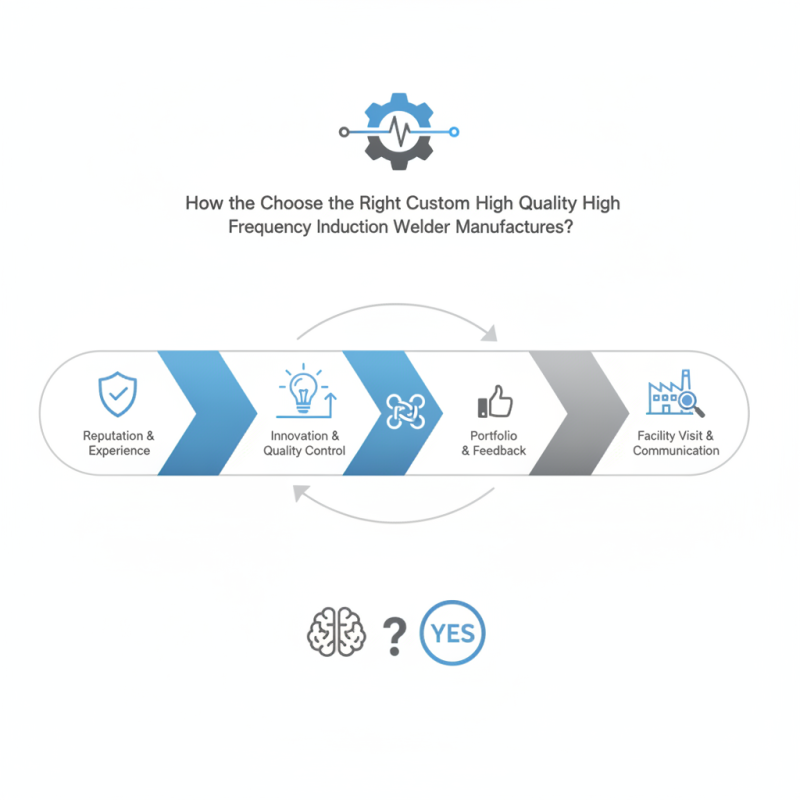
A good high-Frequency Induction welder should give you reliable performance, no surprises. When you're looking, consider companies that prioritize innovation and strict quality control. Checking out their portfolio and reading customer reviews can tell you a lot about how trustworthy they are—that kind of social proof really helps.
If you get the chance, visiting their production site can be a game-changer. It helps you see firsthand how serious they are about quality and capacity. Plus, chatting directly with the manufacturers makes everything clearer and builds some trust. Choosing the right partner isn’t just about the price; making a smart, informed decision now can save you headaches down the line—and nobody wants regrets later, right?
Understanding High Frequency Induction Welding Technology
High-frequency induction welding technology has gained traction in various industries, including automotive and aerospace. This method utilizes electromagnetic fields to rapidly heat materials. According to a recent industry report, the global high-frequency induction welding equipment market is projected to grow at a CAGR of 6.5% from 2021 to 2028. This growth reflects the increasing demand for efficient welding solutions in high-end applications.
Understanding the fundamentals of high-frequency induction welding is crucial for selecting the right equipment. The process offers several advantages, such as reduced production times and lower energy consumption. However, it’s essential to recognize that not all induction welders are equal. Variability in quality can lead to joint weakness if the correct parameters are not set. Research shows that improper settings can result in up to 30% material wastage, a significant concern for manufacturers aiming for high efficiency.
Choosing a reliable manufacturer of High-Frequency Induction Welders requires careful consideration. It’s vital to look for companies with extensive industry experience and a proven track record. Reportedly, around 45% of manufacturers experience challenges related to equipment reliability and performance. Seeking manufacturers with solid customer reviews and certifications can mitigate these risks and enhance overall production quality. Proper selection of a high-frequency induction welder can significantly impact welding outcomes, influencing both efficiency and product integrity.
Identifying Key Features of Quality Induction Welders
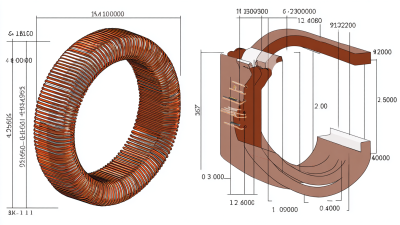
When selecting a custom high quality High Frequency Induction welder, identifying key features is essential. Quality induction welders rely heavily on the technology and materials used in their construction. For instance, inductors made from high-grade copper can significantly enhance efficiency. Studies show that systems with copper components achieve up to 30% better energy conservation than those made with inferior materials.
Power output is another critical feature. A reliable high-frequency induction heater typically operates within a range of 10 kW to 100 kW. This not only affects melting speed but also the precision of heat application during welding. However, some manufacturers may offer misleading power ratings. It’s crucial to verify the actual performance levels through industry assessments like those published by the American Welding Society.
Safety and user-friendliness are also vital. Safety certifications from recognized organizations provide assurance of the equipment's reliability. But beware—sometimes, manufacturers overlook the ergonomics of their designs, which can hinder long-term usage. For instance, controls should be intuitive, yet overly complicated interfaces can lead to operator errors. These factors deserve your reflection when browsing options in the market.
Researching Manufacturer Reputation and Experience
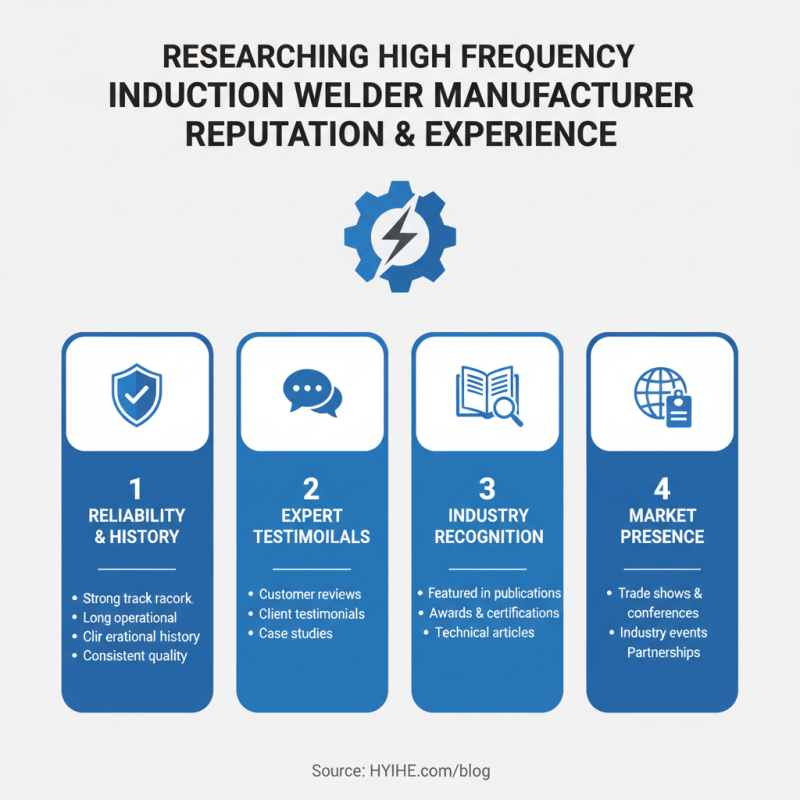
When selecting a custom high-quality High Frequency Induction welder manufacturer, researching reputation is crucial. A manufacturer with a strong history demonstrates reliability. Look for reviews and testimonials that highlight their expertise in high frequency induction processes. Seek out industry publications that feature their work. Manufacturers with a solid standing often participate in trade shows and conferences. This visibility can indicate that they are trusted in the field.
Experience also plays a vital role. A manufacturer should have years of experience in producing high frequency induction welders. Ask about their projects and clients. A high-quality manufacturer embraces innovation. They should keep updating their technology and processes. Look for case studies showcasing their successful projects. Don’t shy away from probing into their challenges too. Understanding how they overcame obstacles can reveal their problem-solving skills and commitment to excellence. The right manufacturer will demonstrate a track record of delivering high frequency induction solutions tailored to various industries.
Evaluating Customization Options and Flexibility
When selecting a custom high-quality high frequency induction welder manufacturer, flexibility is essential. Customization allows manufacturers to adapt their products for specific applications. According to a report from the International Journal of Advanced Manufacturing Technology, 82% of manufacturers prefer partners who offer tailored solutions. This indicates a strong market trend toward personalized production.
Customization involves several factors. First, it includes the technical specifications of the High Frequency Induction Furnace. By having options like coil design, power input, and cooling systems, manufacturers can optimize performance for their unique requirements. Flexibility in production volume is also vital. Changes in demand can result in production adjustments. An adaptable manufacturer can accommodate these shifts seamlessly.
Another consideration is the support they offer. Effective communication can reduce misunderstandings during the design process. Quality assurance practices are crucial too. According to industry standards, implementing rigorous testing can enhance the reliability of welders. Without proper support, manufacturers may face delays and increased costs. Thus, weighing customization options and flexibility is critical when choosing a partner for high-frequency induction welding solutions.
Assessing Technical Support and After-Sales Service
When selecting custom high-quality high-frequency induction welder manufacturers, it is crucial to evaluate their technical support and after-sales service. These elements often dictate the overall satisfaction and success of your operations. Reliable manufacturers should provide extensive technical assistance before and after the sale. This means they should be readily available to answer any inquiries promptly.
Tips: Ask about the availability of support personnel during your typical operating hours. Fast responses can save you downtime and increase productivity. Additionally, seek out manufacturers that offer comprehensive training sessions. Well-informed operators can make better use of the equipment.
Look for manufacturers who provide warranties and guarantee services. This shows they stand behind their products. However, don't rely solely on warranties; check customer reviews and testimonials. Genuine feedback from previous users can reveal a manufacturer’s reliability. Sometimes, reality may not align with marketing promises.
Evaluating the quality of after-sales service is essential. Pay attention to how issues are resolved. A manufacturer’s responsiveness to problems sets them apart in the market. If possible, observe their support channels, such as online forums or help desks. This will give insight into their commitment to customer care.
Comparing Pricing and Warranty Policies
When choosing a custom high-quality high-frequency induction welder manufacturer, pricing is a crucial factor. Many companies offer a range of pricing options. Some may seem attractive at first glance, but hidden costs can emerge. It’s essential to read the fine print. Consider whether the initial cost covers all necessary features. A lower price might mean fewer included services, impacting long-term value.
Warranty policies also play a significant role. A comprehensive warranty can signal a manufacturer’s confidence in their product. Manufacturers with solid warranties often stand behind their quality. Look for policies that cover parts and service for several years. Shorter warranties may indicate inferior products. Understand the conditions associated with the warranty. Some policies may be difficult to claim, leaving customers in a bind.
Balancing price and warranty can be challenging. A cheaper option may lead to higher costs later. Investing in a reliable welder often pays off. Be wary of deals that seem too good to be true. It's about finding a balance between upfront costs and long-term reliability. Always research thoroughly before making a decision.
How to Choose the Right Custom High Quality High Frequency Induction Welder Manufacturers? - Comparing Pricing and Warranty Policies
| Manufacturer Type | Price Range (USD) | Warranty Period | Technical Support | Customization Options |
| Standard | $5,000 - $10,000 | 1 Year | Email Support | Limited |
| Premium | $10,000 - $20,000 | 2 Years | 24/7 Phone & Email | Moderate |
| Advanced | $20,000 - $50,000 | 3 Years | Dedicated Technician | Extensive |
| Custom Built | $50,000+ | 5 Years | On-Site Support | Fully Customizable |
Reading Customer Reviews and Testimonials
When selecting a high-quality custom high-frequency induction welder manufacturer, customer reviews are invaluable. They provide insights into real user experiences. Many reviews highlight durability and efficiency. However, some customers mention issues that went unresolved. This inconsistency can be telling. Look for detailed feedback about the product’s performance and longevity.
Testimonials often reveal how manufacturers handle support and service. Customers appreciate prompt responses and effective solutions. Conversely, some manufacturers receive criticism for poor communication. It’s essential to weigh both positive and negative feedback. This balance can aid in making an informed decision.
Consider the overall sentiment of the reviews. Enthusiastic recommendations are promising, but scrutinize the specifics. Videos and photos in testimonials can offer additional perspective. Authentic feedback might include challenges faced after purchase. Reflection on these aspects can significantly influence your choice.
Optimizing Thermal Assembly Processes in Electric Motors: The Role of Induction Heating Equipment for Housing and Stator
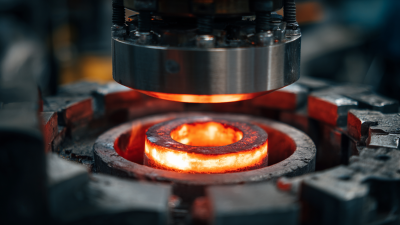
Induction Heating equipment has emerged as a transformative tool in optimizing thermal assembly processes for electric motors, particularly in the critical tasks of stator housing assembly. This advanced technology leverages the principles of electromagnetic induction to produce heat in a highly localized and controllable manner. By doing so, it ensures that metal components are heated uniformly and rapidly, which is vital for achieving precise fits and minimizing material stress during assembly. This is especially important in industries such as automotive, aerospace, and electrical, where the integrity of motor assemblies directly impacts performance and reliability.
One of the standout features of industrial induction heating systems is their adjustable power output, which allows for precise temperature control tailored to specific assembly requirements. Coupled with sophisticated monitoring systems and automated process control, these units guarantee consistent and repeatable heating results. The reduction in assembly time attributed to rapid heating cycles not only enhances overall productivity but also extends the lifespan of components by maintaining optimal thermal conditions. With energy efficiency at the forefront, these systems represent a modern solution for manufacturers seeking to elevate their assembly processes while adhering to high-quality standards.
FAQS
: A strong reputation indicates reliability and expertise in high frequency induction processes.
Years of experience, successful projects, and client relationships showcase a manufacturer's capabilities.
Customization covers technical specifications like coil design, power input, and cooling systems.
Adapting to changes in demand ensures production meets specific needs efficiently.
Comprehensive warranties reflect confidence in quality. Short warranties may signal potential issues.
Lower initial prices might hide costs. Always check if all necessary features are included.
Effective communication and quality assurance reduce misunderstandings and improve reliability.
Understanding obstacles they faced reveals their problem-solving skills and commitment to quality.
Not necessarily. A cheap option can lead to higher costs later if services are lacking.
Look for a fair price that ensures reliability and a robust warranty for peace of mind.
Conclusion
Choosing the right custom high quality High Frequency Induction Welder manufacturer involves several critical considerations. First, understanding the technology behind high frequency induction welding is essential, as it informs the selection of welders that meet specific needs. Identifying key features of quality induction welders, such as efficiency, durability, and performance, is necessary for ensuring optimal results in welding applications.
Additionally, researching the manufacturer’s reputation and experience in the industry helps in gauging reliability. Customization options and flexibility offered by the manufacturer are important to cater to unique project requirements. One should also assess the technical support and after-sales service available, as these play a vital role in long-term satisfaction. Lastly, comparing pricing structures and warranty policies alongside reading customer reviews and testimonials provides valuable insights into the manufacturer's credibility and product efficacy, ultimately guiding a well-informed decision.