Lately, there's been quite a spike in the demand for Induction heating coils. Thanks to advances in manufacturing and energy efficiency, more industries are jumping on board. I came across a report from Market Research Future that predicts the global market for induction heating equipment will grow at a compound annual growth rate of about 5.7% between 2021 and 2027—gulp, that's over $5 billion! It’s pretty clear that a lot of sectors, like automotive and electronics, are really warming up to this tech.
Dr. James T. Robinson, a thermal engineering expert, keeps stressing how important it is to pick good quality induction heating solutions. He often says, “The performance of an induction heating coil really depends on its design and what it’s made of.” As the market keeps evolving, though, buyers are faced with tons of options, and it’s easy to overlook some key details—like frequency and power ratings—that can make or break the application.
Plus, a lot of folks around the world are left scratching their heads over compatibility and how well these coils actually perform for their specific needs. Not all coils are a perfect fit for every task, so understanding exactly what you need is super important. With a bit of research and some know-how, buyers can make smarter choices—ensuring they get reliable, efficient heating solutions that actually do the job for all sorts of uses.
Introduction to Induction Heating Coils
Induction heating coils play a critical role in modern manufacturing. They are designed to generate heat through electromagnetic induction, making them essential for various applications. These coils can heat metals efficiently without direct contact, which minimizes energy loss.
The process involves passing an alternating current through the coil to create a magnetic field. When a conductive metal is placed within this field, eddy currents form, producing heat. This technique is often applied in processes like metal hardening, brazing, and forging.
Buyers looking for induction coil heating solutions must consider factors like coil design, material compatibility, and power requirements.
Understanding the intricacies of induction coil heating is vital.
The construction quality can vary significantly, impacting performance. Buyers should explore options and evaluate temperature control mechanisms. Trustworthy suppliers provide materials that withstand high temperatures and resist wear. Finding reliable solutions may require time and effort, but the benefits of using effective induction heating coils can justify the search.
Key Factors to Consider When Selecting Induction Heating Coils
When selecting induction heating coils, it’s crucial to consider key factors that impact performance. Induction heating coils vary widely based on design, material, and application. A Large Induction Heating Coil, for instance, offers advantages in heating efficiency and speed. However, it may not always be the best choice for every setup. The performance can also depend on the workpiece size and shape, which are often overlooked in the selection process.
Quality matters significantly. Assessing the materials used in the coils can reveal their durability and efficiency. Lower-quality materials may lead to inconsistent heating and increased energy consumption. Buyers should think critically about the source of the coils. Not all manufacturers meet strict quality standards. Research into the company’s experience and their reviews may provide insight into their reliability.
Furthermore, compatibility with existing systems is vital. A coil that fits poorly can hinder productivity. Often, buyers neglect to confirm measurements or specifications, leading to mismatches. Additionally, support and guidance from the supplier should be reliable. Seek out vendors with strong industry knowledge. Their expertise can help navigate complexities involved in choosing the right coil. This step can make a real difference in achieving optimal heating results.
Popular Types of Induction Heating Coils Available Globally
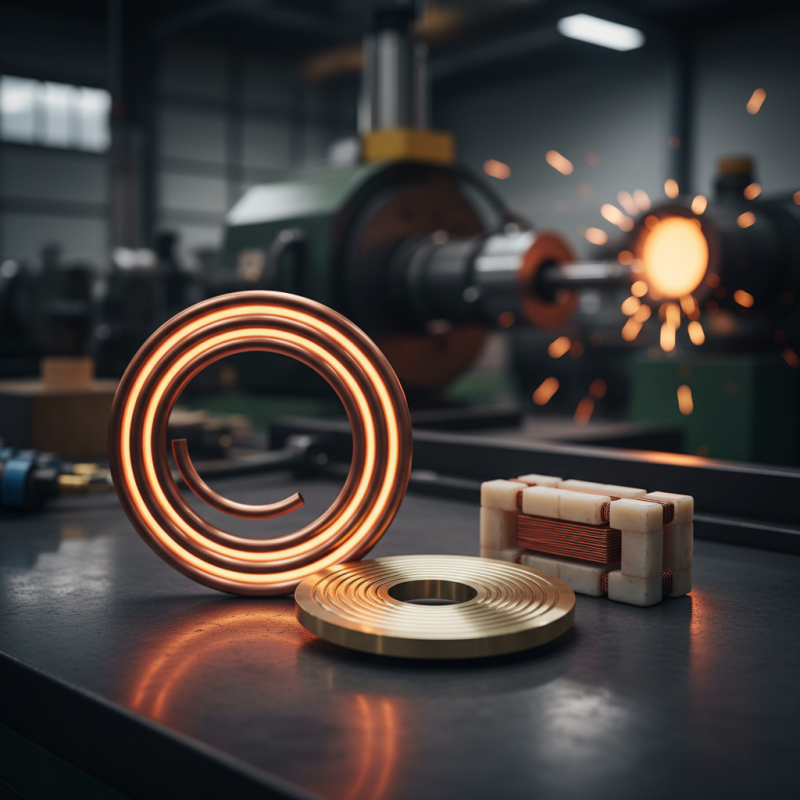
Induction heating coils are essential in various industrial applications. They are used for heating metals, forming parts, and even in cooking appliances. Globally, several types of induction heating coils gain popularity due to their efficiency and ease of use. Some common types include pancake coils, helical coils, and multi-turn coils. Each design has unique benefits for specific applications.
Pancake coils are ideal for surface heating. They provide uniform heating over flat surfaces. Meanwhile, helical coils are suitable for continuous heating processes. They allow for swift heating of cylindrical objects. Multi-turn coils can manage larger parts but might require more complex setups. According to a recent industry report, the global induction heating market is expected to reach over $2 billion by 2025, indicating significant growth.
When selecting an induction heating coil, consider application specifics. Think about the geometry of the parts involved. The size and power output must align with your heating requirements. Remember, improper selection can lead to inefficiencies. Be aware of potential overheating or incomplete heating of the workpieces. Adaptation is key for success in this technology-driven field.
Comparative Analysis of Induction Heating Coil Manufacturers
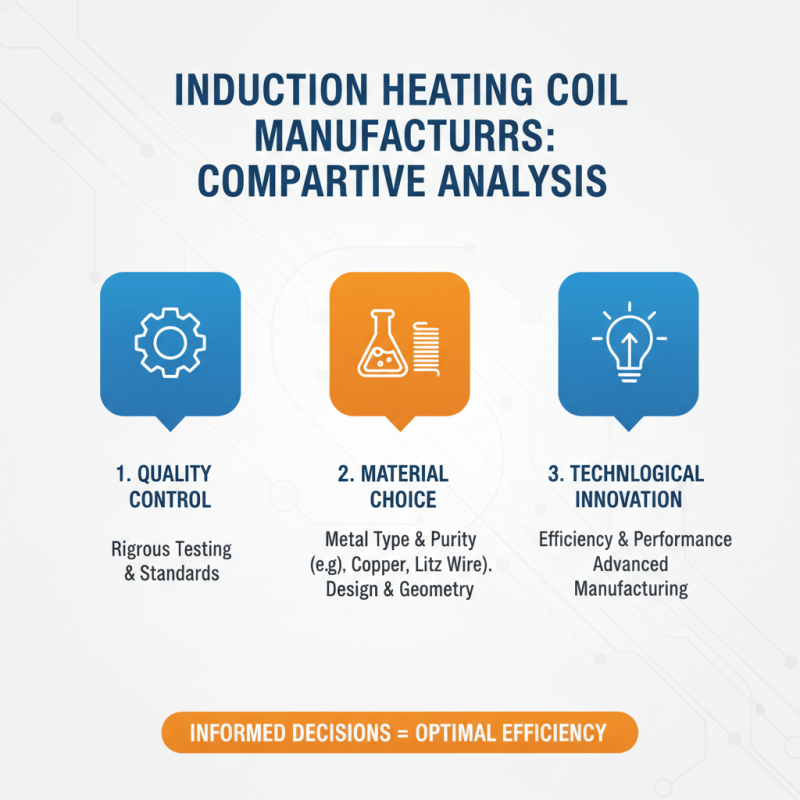
When comparing induction heating coil manufacturers, several factors stand out. Quality control, material choice, and technological innovation are key aspects. Manufacturers often use different metals and designs, which can affect efficiency. Understanding these differences is vital for informed decisions.
Tips: Evaluate the materials used. Higher-quality metals enhance durability and performance.
Price is another determining factor. Some manufacturers may offer lower prices to gain market share. However, this can lead to compromises in quality. Conducting thorough research is essential. Check for certifications and customer reviews before making a purchase.
Tips: Read customer feedback. It provides insight into performance and reliability.
Not all manufacturers provide the same level of support. Reliable service can significantly impact long-term satisfaction. Do not overlook after-sales support. Response times and technical assistance are crucial. A manufacturer that prioritizes customer experience tends to be more dependable.
Innovative Technologies in Induction Heating Coil Design
Induction heating technology has made significant strides in recent years. One of the most notable advancements lies in the design of the induction heating coil. These coils are essential for efficient heat generation and play a critical role in many applications. The challenge lies in achieving the perfect balance between efficiency, life span, and operational cost.
Innovative materials, such as advanced alloys and composites, are being used to enhance the performance of the Induction Heating Coil Machine. These materials can withstand higher temperatures and reduce energy loss. Additionally, improved manufacturing processes allow for better precision in coil design. With these innovations, industries can benefit from improved heating speeds and reduced maintenance costs.
However, not all designs perform equally well across various conditions. Real-world application often reveals flaws not accounted for during the design phase. Engineers must continually reassess and refine their approaches. It’s essential to prioritize ongoing testing and feedback to achieve optimal results. Induction Heating Is evolving, yet its future depends on addressing these challenges responsibly.
Best Induction Heating Coil Solutions for Global Buyers
This chart illustrates key performance metrics for various induction heating coil solutions. The data includes efficiency, durability, cost, and innovation scores that global buyers consider when selecting the best induction heating coil options.
Applications of Induction Heating Coils Across Various Industries
Induction heating coils have gained traction in numerous industries due to their efficiency and precision. In automotive manufacturing, these coils are pivotal for processes like hardening and tempering metal components. They heat only the necessary parts, conserving energy and time. This targeted heating is essential when creating durable and high-performance vehicle parts.
In the culinary sector, induction heating coils provide rapid cooking. They ensure even heat distribution, making them perfect for professional kitchens. Cooks appreciate the instant temperature control, allowing for precise cooking. However, the initial cost can be a barrier for smaller establishments. Investing in such technology can be daunting, but the long-term gains in efficiency often justify the expense.
In electronics, induction heating is used for soldering and brazing. It provides clean and reliable joints without contaminating materials. Yet, not all coils are created equal. Selecting the right coil for specific tasks is crucial. Misjudgment can lead to poor results, which may necessitate costly redo. Overall, the diverse applications of induction heating coils demonstrate their importance across various fields. The technology is evolving, presenting both opportunities and challenges for users.
Best Practices for Maintenance and Operation of Induction Heating Coils
When operating induction heating coils, maintenance is key for optimal performance. Regularly inspect the components for wear and tear. Improper handling can lead to decreased efficiency and potential failures. The coil connections should be secure, and any loose fittings should be addressed immediately.
Using Pancake Coil Induction Heating systems offers unique advantages. Their flat design increases the surface area for heating, enabling efficient processing. However, improper installation can lead to uneven heating. This not only affects productivity but can also risk damaging the workpieces.
It's essential to monitor the operating environment. High temperatures and humidity can impact the coil's performance. Keeping the Induction Heating Unit clean is necessary for long-term reliability. Regular cleaning can prevent dust buildup that might interfere with heat transfer. Implementing a scheduled maintenance routine is a practical approach that can save costs and enhance performance over time.
Revolutionizing Electronics Welding: The Advantages of High Efficiency 6KW Induction Heater Machines in Production Lines
In the fast-evolving world of electronics manufacturing, the demand for precision and efficiency is paramount. High efficiency 6KW induction heater machines are revolutionizing the production lines, particularly in the realm of electronics welding. These industrial-grade devices offer rapid and consistent heating, making them ideal for high-volume applications such as soldering, brazing, and annealing. According to industry studies, induction heating technology can reduce energy consumption by up to 50% compared to conventional heating methods, making it a more sustainable choice for manufacturers.
The design of these 6KW machines caters to both automated and semi-automated manufacturing environments, facilitating seamless integration into existing production workflows. They ensure that components are uniformly heated, significantly improving the quality and reliability of welds. Data from market reports indicate that the adoption of automated induction heating is set to grow by over 20% annually, as manufacturers increasingly seek solutions that enhance productivity while minimizing waste.
One of the standout benefits of high efficiency induction heaters is their precise temperature control, which is critical in preventing overheating and material degradation. This capability not only enhances the durability of electronic components but also reduces the risk of production failures. As the electronics industry continues to prioritize efficiency and scalability, the shift towards advanced induction heating solutions is likely to pave the way for smarter and more sustainable manufacturing practices.
FAQS
: Induction heating coils generate heat through electromagnetic induction for various manufacturing applications.
An alternating current passes through the coil, creating a magnetic field that heats conductive metals using eddy currents.
Buyers should consider coil design, material compatibility, and power requirements. Quality can vary significantly.
Higher-quality metals improve durability and performance, impacting the efficiency of the heating process.
Lower prices may lead to compromised quality. Conduct thorough research to ensure good value for money.
Customer feedback provides valuable insight into performance and reliability. It helps in making informed decisions.
Reliable service and technical assistance are crucial for long-term satisfaction. Don't overlook support when choosing a manufacturer.
They are used in automotive manufacturing, professional kitchens, and electronics for processes like metal hardening and soldering.
The initial cost can be a hurdle for smaller establishments, but long-term efficiency often justifies the investment.
Not all coils are equal; choosing the wrong one can lead to poor results, requiring costly rework or adjustments.
Conclusion
Induction heating coils are pivotal in various industrial applications, providing efficient and precise heating solutions. When selecting the right induction heating coil, buyers should consider key factors such as size, material compatibility, and power requirements, which can significantly impact performance. There are several popular types of coils available globally, each tailored for specific functions, making a comparative analysis of manufacturers crucial for informed decision-making.
Innovation in induction heating coil technology continues to evolve, with advances focusing on enhanced efficiency and durability. The applications of these coils span multiple industries, including automotive, aerospace, and manufacturing, showcasing their versatility. To maximize the lifespan and effectiveness of induction heating coils, adopting best practices for maintenance and operation is essential. This comprehensive understanding of induction heating coils equips global buyers to make optimal choices for their heating needs.