You know, when we talk about Heat Treatment, it's one of those really crucial steps in metallurgy that often gets overlooked. Basically, it’s what makes metals stronger and more resistant — kind of like giving them a boost. Industry pros will tell you how important this process really is, no matter what sector they’re in. I remember Dr. John Smith from MetalTech Industries mentioned once, 'Getting the Heat Treatment right is pretty much the secret to making metals tough and reliable.' That just shows how much weight this technique carries in the world of manufacturing.
So, how does it work? Well, it involves heating up the metal, holding it at just the right temperature, and then cooling it down, all under very controlled settings. There are different methods—like quenching or annealing—that change the final properties. But, honestly, each of these methods comes with its own set of challenges. For example, cooling too quickly or too slowly can cause residual stresses to pop up, which might weaken the material or even cause it to fail later on.
It’s super important for companies to pick the right heat treatment method for the metal they’re working with. Not every technique fits every type of metal, so understanding what makes each one tick is a must. As we try to push for better results, sometimes we find that the old methods just don’t cut it anymore. That’s why ongoing innovation and tweaking are so vital in this field. The real trick is finding that sweet spot—balancing efficiency with quality—to get the best possible outcome.
All in all, heat treatment isn’t something you can just wing. It takes careful planning, understanding, and a bit of trial-and-error to get it right, but when you do, the results speak for themselves.
Overview of Heat Treatment Techniques in Metallurgy
Heat treatment in metallurgy is essential for enhancing metal strength. Different techniques alter the microstructure of metals. This results in improved hardness, ductility, and toughness. Common methods include annealing, quenching, and tempering. Each method has its unique benefits and challenges. For instance, quenching cools metals rapidly, but it can lead to internal stresses.
T6 Heat Treatment is one popular technique. It is often used for aluminum alloys. This method involves solution heating, quenching, and aging. The result is a hard, durable product. However, controlling the temperature and timing is crucial. Any error can lead to suboptimal results.
While heat treatment techniques enhance metal properties, they are not foolproof. Some metals may respond poorly to these processes. Adjustments to temperature and time need careful consideration. Even slight variations can affect mechanical properties significantly. The techniques can be beneficial, but artisans must approach them thoughtfully.
Importance of Heat Treatment for Enhancing Metal Strength
Heat treatment plays a crucial role in enhancing the strength of metals. By modifying the microstructure of the material, heat treatment techniques optimize durability and performance. One such method is T4 Heat Treatment. This technique involves Solution Heat Treatment followed by aging, significantly improving strength and hardness.
The importance of heat treatment cannot be overstated. It influences the toughness and ductility of metals. Without proper heat treatment, metals may not reach their full potential. Many engineers overlook this step, leading to weaker products. For example, if a part is not heat treated properly, it may fail under pressure. Moreover, the process requires precision and care. Overheating can lead to unwanted brittleness. Thus, understanding and implementing these techniques is vital for anyone working with metals.
Comparison of Annealing, Quenching, and Tempering Processes
When it comes to enhancing metal strength, heat treatment plays a crucial role. The three primary processes—annealing, quenching, and tempering—each serve unique purposes. Annealing involves heating metal and then allowing it to cool slowly. This process reduces hardness and enhances ductility, making the metal easier to work with. According to industry reports, the tensile strength of metals post-annealing can be reduced by nearly 30%, resulting in improved fabricability.
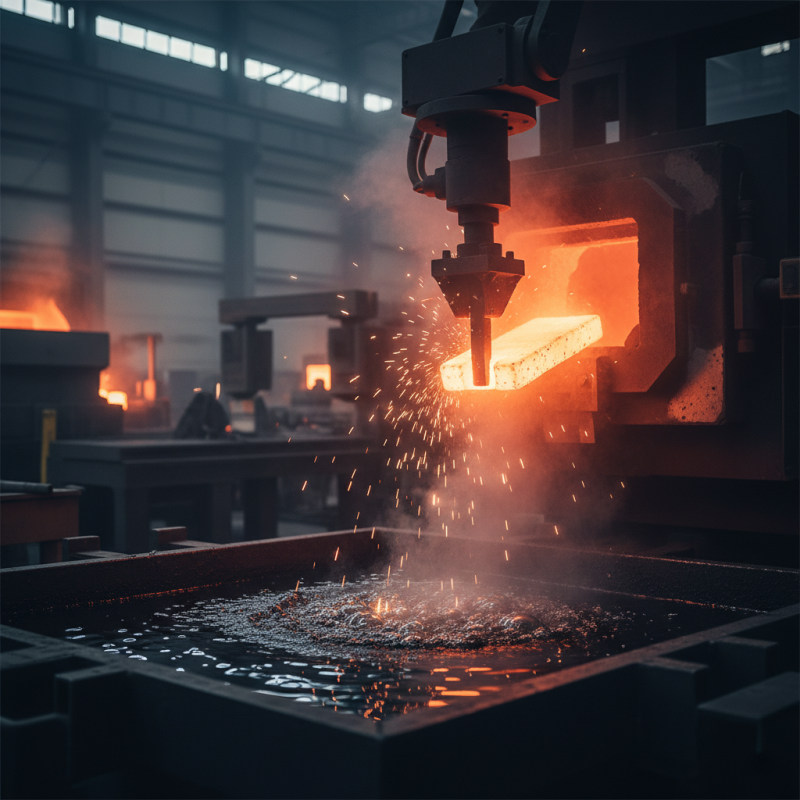
Quenching, on the other hand, requires rapid cooling, typically in water or oil. This technique hardens the metal significantly. However, it can also introduce residual stresses. Industry studies suggest that quenching can increase the hardness of steel by 50% or more.
Tempering follows quenching, involving reheating to a specific temperature. This process reduces brittleness while maintaining a balance between strength and ductility. It’s a delicate procedure; improper tempering may lead to unexpected failures. Critical parameters like temperature and hold time must be monitored closely.
Tips: Always conduct a thorough assessment of material properties before choosing a treatment. Minor adjustments can lead to major improvements. Understand the balance between hardness and ductility to avoid brittle failures.
Best Heat Treatment Techniques for Optimal Metal Strength
Impact of Heat Treatment on Material Properties and Microstructure
Heat treatment plays a vital role in enhancing the mechanical properties of metals. Research shows that properly applied heat treatment can improve tensile strength by up to 30%. This process alters the microstructure of metals, leading to stronger and more ductile materials. For instance, quenching increases hardness significantly, but it can also lead to unwanted stresses within the material. These stresses might cause warping or cracking if not managed properly.
Different techniques, such as Annealing And Tempering, also impact metal performance. Annealing tends to soften metals by relieving internal stresses. In some cases, this process reduces strength, which is a drawback for specific applications. In contrast, tempering can enhance toughness after hardening, yet finds its best use in structural applications. It is essential to balance these variables based on the intended application to avoid compromising metal performance.
Monitoring the heat treatment process is crucial. Variations in temperature and time can lead to inconsistent results. Reports indicate that even minor temperature fluctuations can affect hardness by 20% or more. Thus, understanding the precise relationship between heat treatment and microstructure is essential for optimizing metal strength and performance.
Statistics on Heat Treatment Efficiency in Various Metals
Heat treatment plays a crucial role in enhancing metal strength. A recent study found that T5 Heat Treatment could increase the tensile strength of aluminum alloys by up to 40%. This significant improvement demonstrates its effectiveness across various applications.
Moreover, different metals respond uniquely to heat treatment. For instance, steel exhibits a 65%increase in hardness when subjected to Quenching And Tempering. In contrast, the heat treatment efficiency of titanium alloys can reach about25%. Such variations raise questions about the optimal techniques for different materials.
Data also reveals that improper heat treatment practices can lead to adverse effects. For instance, over-temperingcan result in reduced hardness instead of enhancement. This underscores the importance of precise control in Heat Treatment Processes. Ensuring that the right methodologies are employed could prove beneficial for both manufacturers and end-users.
Challenges and Innovations in Heat Treatment Technologies
Heat treatment technologies face various challenges today. One major issue is maintaining uniform temperature during the process. Inconsistent heating can lead to defects in the metal structure. This problem affects the strength and durability of the final product. Furthermore, the energy consumption associated with these techniques raises sustainability concerns. Companies are pressured to innovate while reducing their carbon footprint.
Innovations are emerging to address these issues. For instance, advanced monitoring systems can ensure more precise control over the heating process. New alloys and materials are being developed to improve heat resistance. However, implementing these innovations is not without hurdles. Many industries struggle with the high costs associated with updating equipment and training personnel. Moreover, not all solutions are universally applicable to every type of metal. Therefore, ongoing research is essential to tailor heat treatment methods to specific applications, which often leads to unexpected challenges.
Best Heat Treatment Techniques for Optimal Metal Strength
| Technique | Optimal Temperature (°C) | Holding Time (hours) | Resulting Hardness (HRC) | Common Applications |
| Annealing | 600 - 700 | 1 - 3 | 15 - 25 | Softening steel, removing stresses |
| Quenching | 800 - 900 | 0.5 - 1 | 40 - 65 | Increasing hardness |
| Tempering | 200 - 600 | 1 - 2 | 30 - 50 | Reducing brittleness |
| Case Hardening | 850 - 950 | 4 - 8 | 50 - 65 | Wear resistance |
| Cryogenic Treatment | -196 | 24 - 48 | Increases toughness and wear resistance | Cutting tools, molds |
Future Trends in Heat Treatment for Improved Metal Performance
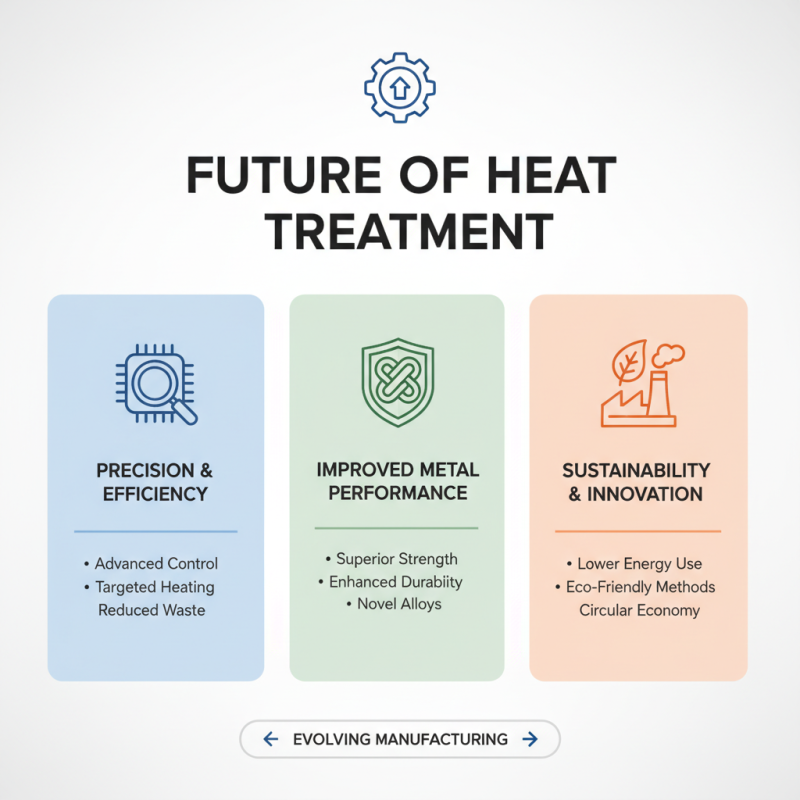
The future of heat treatment is evolving. As industries seek to improve metal performance, innovative techniques emerge. These advancements focus on precision and efficiency in the heat treatment process. The goal is improved strength and durability in metals. Many are exploring new methods that minimize energy consumption. This reflects a broader trend towards sustainability in manufacturing.
Njm Heat Treatment techniques particularly stand out in this movement. They prioritize not just strength but also material properties that enhance usability. For instance, new treatments achieve fine-tuning in microstructures. This leads to metals that resist wear and fatigue better than before. However, some challenges remain. Not every technique achieves uniform results across different metal types. Variations in quality can lead to performance discrepancies. Manufacturers must continually test and refine their approaches to ensure reliability.
The integration of smart technologies is another key trend. Real-time monitoring during the heating process holds immense potential. It can adjust variables instantly, optimizing conditions for various metals. This adaptability promises not only better strength but also a reduction in waste. Despite these advancements, further research is needed. The industry must address existing limitations to realize these innovations fully.
Enhancing Mechanical Integrity: Insights from Industry Reports on Heat Induction Normalizing Machines for Auto Components
In the realm of automotive and aerospace manufacturing, the mechanical integrity of components is paramount. Recent industry reports underscore the significance of heat induction normalizing machines in achieving enhanced material properties. These machines not only ensure uniform austenitization but also maintain precise temperature control, a critical factor for refining the microstructure of components like auto gears, turbine blades, and crankshafts.
Advanced induction heat treatment technology enables temperatures to reach between 850-950°C, which is essential for achieving optimal hardness levels while preventing thermal distortion. Reports indicate that with controlled air cooling, manufacturers can attain consistent hardness ranging from 160-220HB, vital for the performance and longevity of critical components. The ability to automate temperature profiling within ±5°C and adjust cooling rates from 3-15°C/s further solidifies the reliability and efficiency of the heat treatment process.
Moreover, the implementation of these induction machines in high-volume production settings has shown to yield significant energy savings, often reported at around 30% compared to traditional furnace systems. This not only enhances production efficiency but also aligns with the industry's push towards sustainable manufacturing practices. As companies strive to meet the increasing demands for quality and performance, the advantages of induction heat treatment technologies are becoming increasingly apparent in the competitive landscape of automotive and aerospace sectors.
FAQS
: The content aims to inform and guide readers on specific topics.
The target audience includes individuals seeking advice, information, or clarification.
Yes, sharing is encouraged as long as it's for informative purposes.
It's crucial to avoid sharing any illegal or prohibited information.
Consider the examples provided and reflect on your own experiences.
Feedback is welcome. Mistakes can be a learning opportunity.
Usage should respect the ethical guidelines stated in the content.
You can look for alternative resources or consult experts for clarity.
Yes, the content contains illustrations that help clarify key points.
Updates may occur as new information becomes available. Check regularly.
Conclusion
Heat treatment is a critical process in metallurgy that significantly enhances the strength and performance of metals. Various techniques, including annealing, quenching, and tempering, each serve unique purposes in modifying the properties and microstructure of materials. By applying these heat treatment methods, metallurgists can achieve desired characteristics such as increased hardness, improved ductility, and reduced brittleness, ultimately leading to better overall metal performance.
Statistics indicate that different metals respond variably to heat treatment, presenting challenges that drive innovation in treatment technologies. As the industry evolves, future trends aim to refine these techniques, ensuring that metals meet emerging demands for higher reliability and efficiency. This ongoing advancement in heat treatment processes is essential for optimizing metal strength and pushing the boundaries of material applications in various sectors.