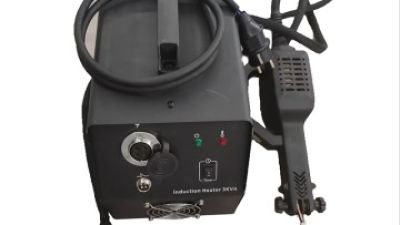
Picking the right Induction Heating equipment can actually be more tricky than you'd think. Gregory Fisher, who's pretty much a go-to guy at Inductoheat Inc., puts it simply: "Knowing exactly what you need is the secret to choosing the best gear." That really underscores how important it is to match your equipment with what your operation calls for.
When you’re looking at industrial induction heating gear, there's a lot to consider—things like power, frequency, and coil design. For example, if you're working with tiny parts, a high-frequency setup might be just what you need. But for bigger tasks, a more powerful system probably makes more sense. All these choices impact how efficient your process is and what kind of results you get.
Honestly, a lot of businesses get stuck here—they jump into buying equipment without really doing their homework first. It’s easy to overlook small details that can make a big difference later on. The right equipment can boost productivity, no doubt, but picking the wrong stuff? That just wastes time and money. So yeah, understanding what you truly need is a must.
Understanding Induction Heating: Basics and Principles
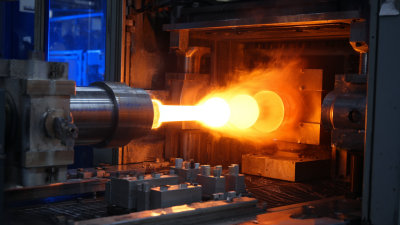
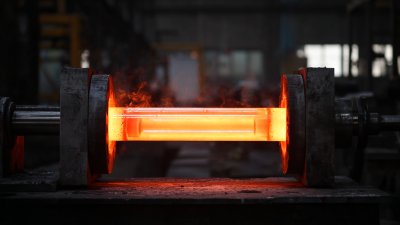
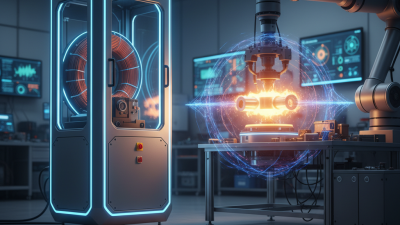
Induction heating is a fascinating technology. It uses electromagnetic fields to heat conductive materials without direct contact. This principle is based on Faraday's law of induction. The metal becomes the heating element as the current flows through it. It's efficient and precise, making it ideal for various applications.
Understanding the basicsis crucial. induction heating systems consist of a power supply and an induction coil. The coil generates the electromagnetic field, while the frequency affects the depth of heat penetration.Higher frequencies heat the surface quickly, while lower frequencies heat deeper. Many users often overlook this detail, leading to suboptimal results.
Choosing the right equipment requires careful thought. Consider your specific needs: size, power, and frequency. A small project might not need a powerful machine. On the other hand, large-scale operations demand robust equipment. It's common to underestimate power requirements, so testing is key. Pay attention to the nuances of your application; this will guide your decision.
Identifying Your Specific Heating Requirements and Applications
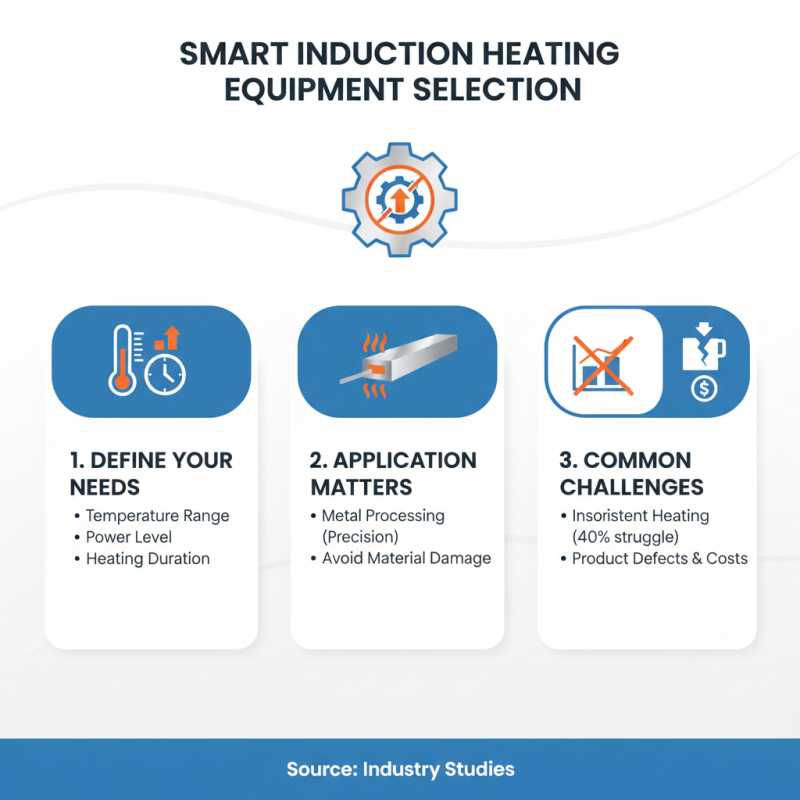
When selecting Induction heating equipment, it's crucial to identify your specific heating requirements. Each application may have different temperature ranges, power levels, and heating durations. For instance, metal processing requires precise temperature control to avoid damaging the material. Studies show that nearly 40% of manufacturers struggle with inconsistent heating. This can lead to product defects and increased costs.
Different sectors have unique needs. For example, the automotive industry often requires rapid heating for welding and brazing. A report from the International Journal of Advanced Manufacturing Technology suggests that the right induction heating equipment can reduce cycle times by up to 30%. Such efficiency gains are essential in today's competitive markets.
Consider the heating capacity you need. Some processes need high frequencies, while others may benefit from lower frequencies for deeper penetration. Data indicates that 70% of users report improved accuracy with tailored induction solutions. Understanding your specific requirements will guide better equipment choices. Evaluate energy efficiency, as poor choices can lead to excessive power consumption. This reflects poorly on operational costs and sustainability goals.
Evaluating Different Types of Induction Heating Equipment
When evaluating different types of induction heating equipment, it’s essential to consider various factors. Each type offers unique advantages and limitations for specific applications. Thermal efficiency is one key metric. According to industry reports, induction heating systems can achieve upwards of 90% energy efficiency. In contrast, traditional heating methods often fall below 70%. This significant difference can impact operational costs.
Furnace Induction Heating Equipmentis another consideration. These systems are designed for metal melting and Heat Treatment. They provide precise temperature control, which is critical for uniform heating. Some studies show that furnace systems can decrease cycle times by 50% when compared to older technologies. However, they often require substantial initial investment, which may not suit every budget.
Moreover, the type of materials you are working with matters. Induction Heating Is especially effective for ferrous metals, but its efficiency can drop with non-ferrous materials. It’s also important to evaluate your production scale. If your needs are small-scale or infrequent, investing in high-capacity equipment could lead to underutilization. Reflecting on these elements can help tailor the right induction heating solution for your specific needs.
How to Choose Induction Heating Equipment for Your Needs? - Evaluating Different Types of Induction Heating Equipment
| Equipment Type | Power Output (kW) | Frequency Range (kHz) | Application | Efficiency (%) |
| Portable Induction Heater | 1.5 - 3.0 | 20 - 100 | Metal Heating, Brazing | 80 - 90 |
| Industrial Induction Heater | 10 - 150 | 1 - 30 | Heat Treatment, Forging | 85 - 95 |
| Induction Melting Furnace | 50 - 300 | 20 - 100 | Metal Melting | 90 - 97 |
| Induction Heating System for Welding | 25 - 100 | 10 - 50 | Welding Pre-heating | 80 - 85 |
| Induction Cooktop | 1.5 - 3.5 | 20 - 60 | Cooking | 85 - 95 |
Key Features to Consider When Selecting Induction Heaters
When selecting induction heating equipment, key features can significantly affect your choice. Power output is crucial. More power translates to faster heating, but it can also lead to greater energy consumption. Consider your needs carefully. Compact designs may fit smaller workspaces, but might not deliver the same efficiency as larger units.
Another important feature is the frequency range. Induction heaters with adjustable frequencies offer versatility. This can be essential for varying applications. Additionally, ease of use cannot be overlooked. Complex interfaces may frustrate operators, leading to inefficiency. Look for user-friendly controls that enhance productivity.
Finally, consider safety features. Induction heating can be risky without proper safeguards. Equipment should include automatic shut-off and overheat protection. This will help prevent accidents and ensure longevity. Reflect on your requirements before making a choice. Balancing features and your specific needs is key to a satisfying purchase.
Assessing Power Requirements and Efficiency Ratings
When choosing induction heating equipment, power requirements and efficiency ratings play a vital role. Power requirements dictate the equipment's ability to heat effectively. Depending on the application, you may need equipment that operates at different power levels. For example, lighter tasks may require only 1-5 kW, while heavy industrial usage can demand 50 kW or more.
Efficiency ratings are equally important. According to the Department of Energy, induction heating typically boasts an efficiency rate of around 80-90%. This means less energy wasted during the heating process. High efficiency translates to lower operational costs. However, some equipment may provide misleading ratings. It's crucial to verify these ratings through third-party testing.
Consider the operational environment. If operating in extreme temperatures, the equipment might perform differently than expected. Moreover, the specific heating tasks can impact efficiency, making it necessary to reflect on unique needs. Inconsistent results can occur in complex setups. Always assess whether the existing infrastructure can support new equipment.
Budget Considerations: Cost vs. Quality in Induction Equipment
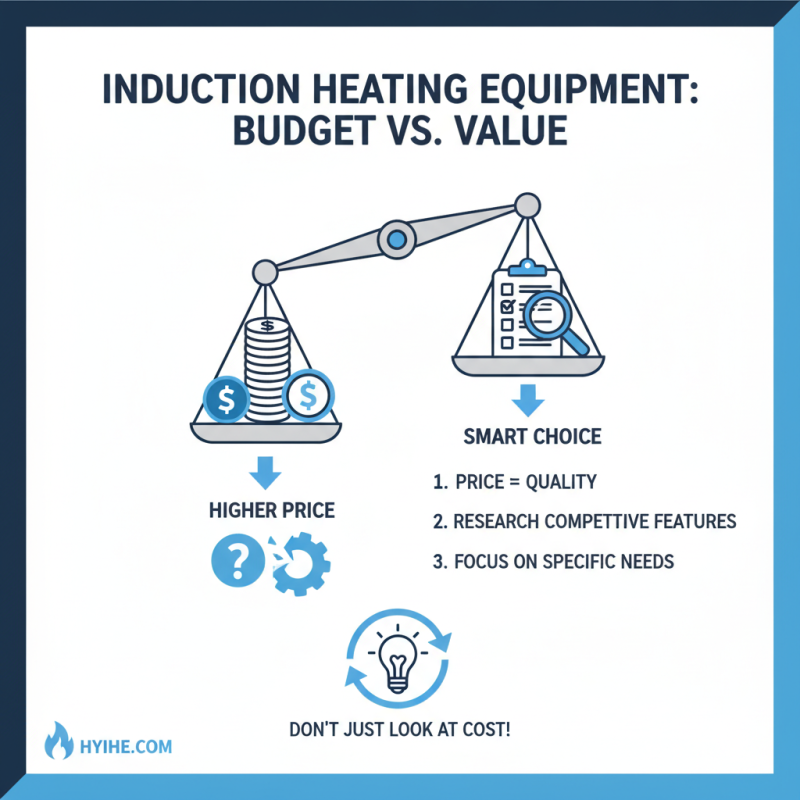
When considering induction heating equipment for manufacturing, budget plays a crucial role. Many believe that a higher price equals better quality. However, this isn't always true. Sometimes, brands with lower prices offer competitive features. A thorough research process can yield surprising options. Focus on specific needs rather than just the cost.
Quality matters, but so does cost. A detailed evaluation can uncover the right balance. For example, assess the durability of the materials used. Check the warranty offered; a longer warranty often indicates confidence in product quality. Some less expensive equipment may lack critical features that could affect your production efficiency. The key is understanding your requirements before making a decision.
Explore various suppliers and understand their offerings. Take time to compare specifications. Many people rush into purchases without proper consideration. This can lead to regrets later on. Choose wisely to avoid unnecessary costs down the road. After all, investing in the right induction heating equipment for manufacturing can enhance productivity and save money in the long run.
Finding Reliable Manufacturers and Suppliers for Induction Heaters
When looking for reliable manufacturers and suppliers for induction heaters, it's important to do your homework. Start by identifying potential suppliers through online research or industry directories. Check for customer reviews and testimonials. A supplier's reputation can tell you a lot. It’s not just about the product quality but also their customer service.
Tips: Always ask for references. Speak with other customers about their experiences. This can provide insight into the reliability of the manufacturer. Don't hesitate to ask about their production process. Understanding how they create Induction Bolt Heating Equipment can significantly impact your decision.
Keep in mind that price isn’t everything. A cheaper option may lead to hidden costs down the line. Evaluate the warranty and support services offered. Ensure they have a responsive support team. Sometimes, a lack of communication signals future problems. Trust your instincts and don’t rush into choices.
Innovative Applications and Benefits of Medium Frequency Small Metal Brazing Induction Heating Machines
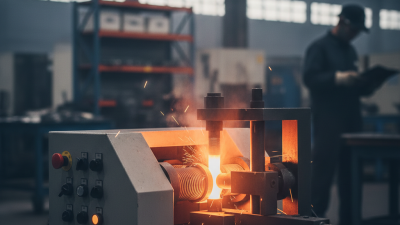
The Medium Frequency Small Metal Brazing Induction Heating Machine represents a cutting-edge solution for the high-demand field of precision metal joining. Operating within a frequency range of 50-100 kHz, this machine provides efficient and consistent heating necessary for effective brazing of small metal components such as copper and stainless steel. By utilizing energy-saving IGBT technology, it achieves a remarkable thermal efficiency of up to 95%, minimizing energy costs while maximizing productivity in industrial settings.
One of the standout features of this machine is its smart temperature control module, which fine-tunes the brazing process to optimize conditions for a variety of materials without introducing oxidation. This ensures high-quality joins and reduces the risk of defects during production. Furthermore, the integrated cooling system allows for stable operation over extended periods, making it especially suitable for industries that require continuous use, such as electronics and medical device manufacturing. The machine’s user-friendly interface and adjustable power output between 3-15 kW cater to diverse production needs, allowing users to easily adapt settings for different applications. With its combination of portability and professional-grade performance, this brazing induction heating machine is a valuable asset for modern manufacturing processes.
FAQS
: The article aims to inform readers about specific topics in a clear manner.
Take notes while reading. Summarize sections in your own words.
Repetition helps. Try discussing the content with others. Practice recall frequently.
Yes, consider real-life situations related to the content. Engage actively.
Don't hesitate to reread difficult sections. Seek additional resources if needed.
Very important. Reflect on the material. Form your own opinions.
Yes, some ideas may be oversimplified. Question everything you read.
Absolutely, but ensure you understand it first. Miscommunication can lead to confusion.
That's okay. Use it as a learning opportunity. Explore the reasons for your disagreement.
Conclusion
When selecting induction heating equipment, it's essential to first understand the fundamental principles of induction heating and how they apply to your specific needs. Identifying your heating requirements, including the materials and applications you'll be using, will guide you in evaluating various types of induction heaters available in the market. Key features such as heating speed, energy efficiency, and control options should also be considered to ensure the equipment meets your operational standards.
Moreover, assessing the power requirements and efficiency ratings of the induction heating equipment will help you make informed decisions that balance performance with energy consumption. Budget considerations are crucial; it's important to weigh the initial costs against the long-term benefits and quality of the equipment. Finally, finding reliable manufacturers and suppliers can ensure that you receive high-quality induction heating equipment tailored to your specific applications and requirements.